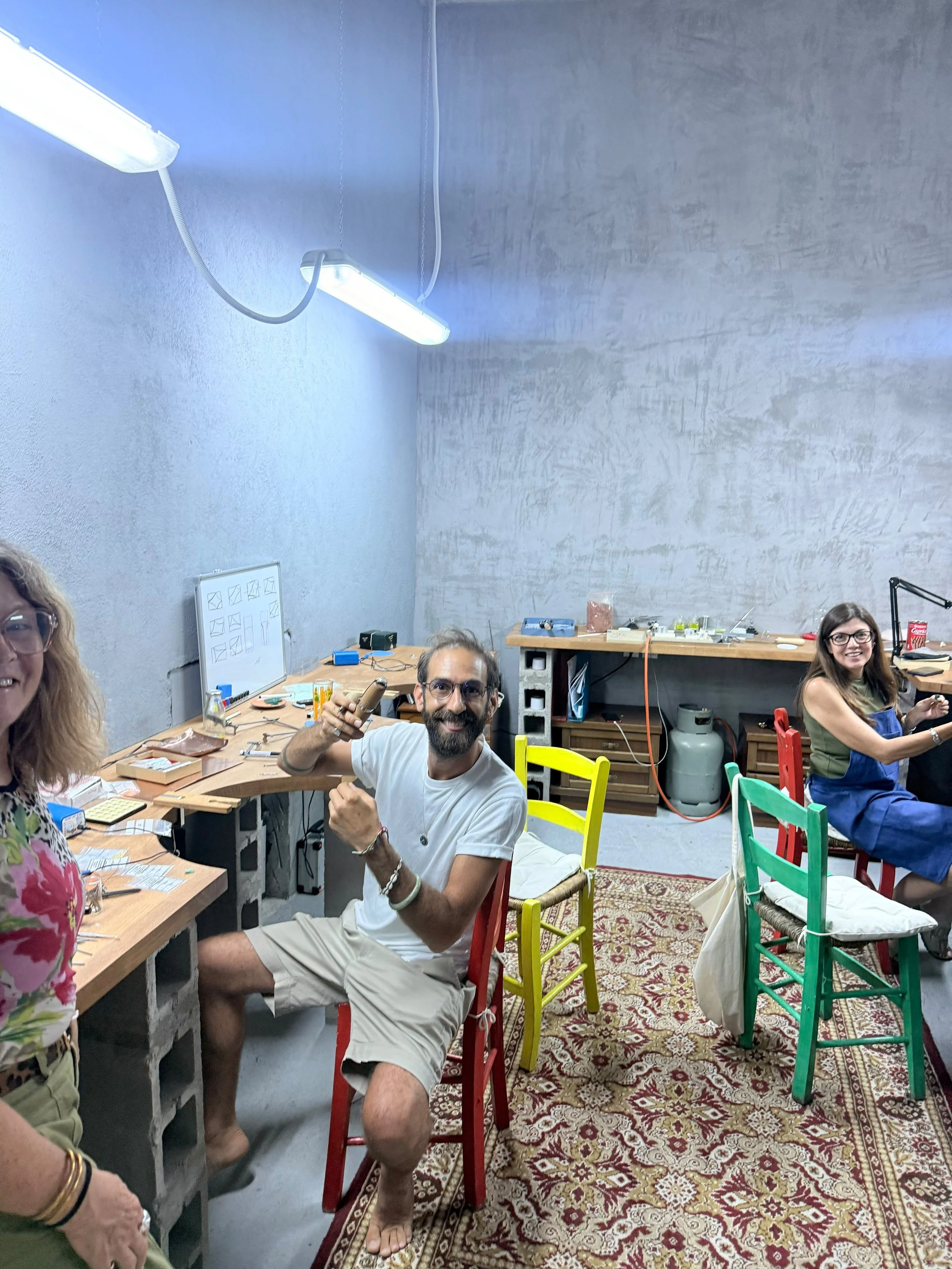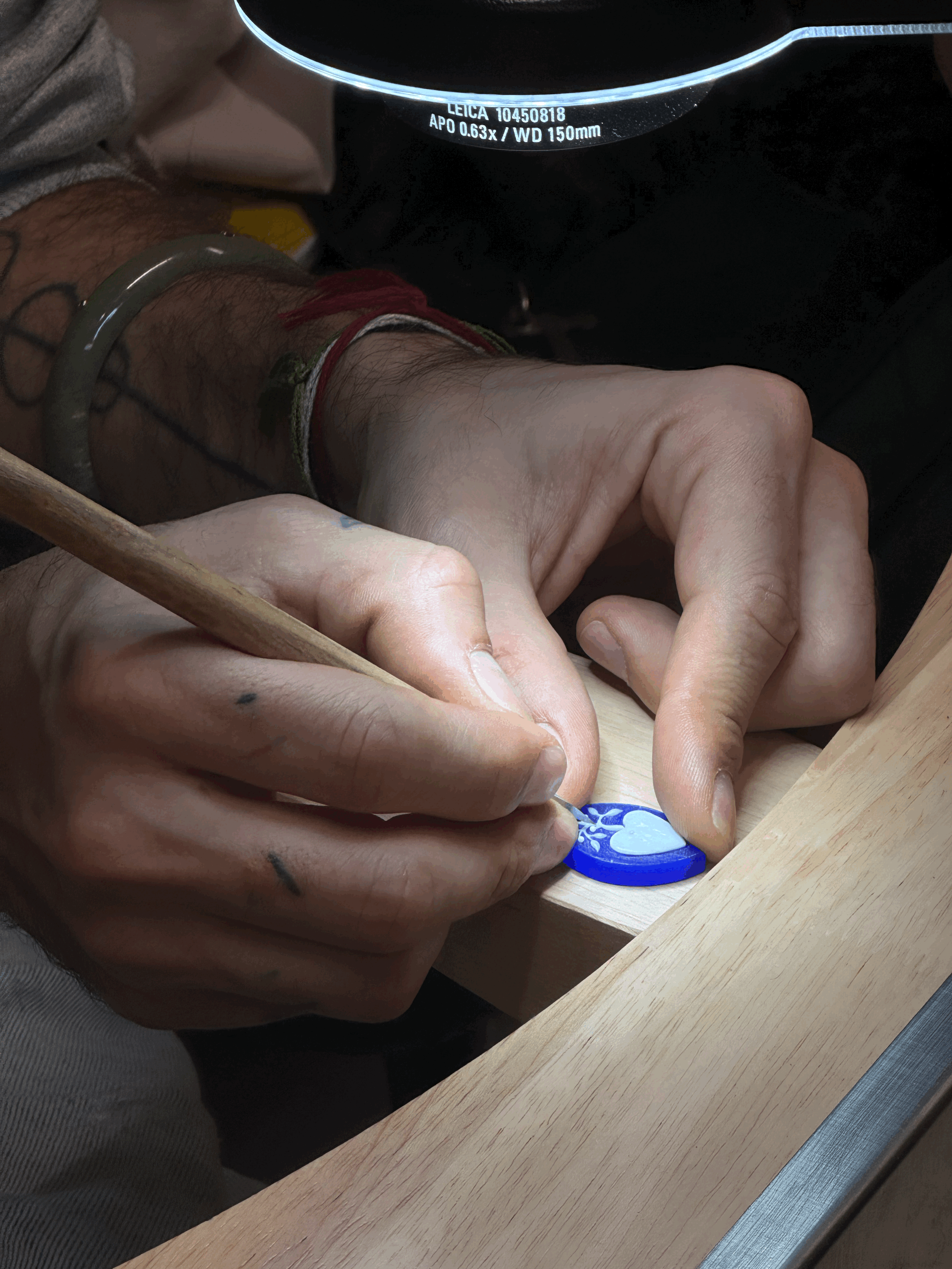
Wax Carving Intensive Programme
Progressive wax carving training for jewellery making, developing technical skills, control and precision through structured modules and dedicated bench time.
40–160 hours · London · Maximum 4 students
TRADITION
SKILL
CREATIVITY
A PROFESSIONAL APPROACH
A PROGRESSIVE APPROACH TO WAX CARVING
How the Programme Works
The Wax Carving Intensive is structured around progressive modules, with 40 hours of dedicated training per module. You can take an individual module or continue through further modules according to your existing skills and training goals.
Each module introduces new techniques and exercises while continuing to develop the control, precision and understanding needed for more complex work. With a maximum of 4 students, the dedicated bench time gives you space to learn, practise, repeat, correct and refine your work as your skills progress.
A module can be completed as an intensive Monday–Friday week, 10am–6pm, or the same 40 hours can be arranged across five weeks, one 8-hour training day per week, where appropriate. The curriculum, training hours and standards remain the same.
40 · 80 · 120 · 160 · +40 hours
Entry into modules depends on your previous knowledge and practical experience in the relevant skills, as outlined within each module below.
Discover What You Can Learn
The Wax Carving Intensive is structured across four progressive 40-hour modules. Each module develops a different area of wax carving while continuing to build control, technical understanding and practical bench skills.
Module 1
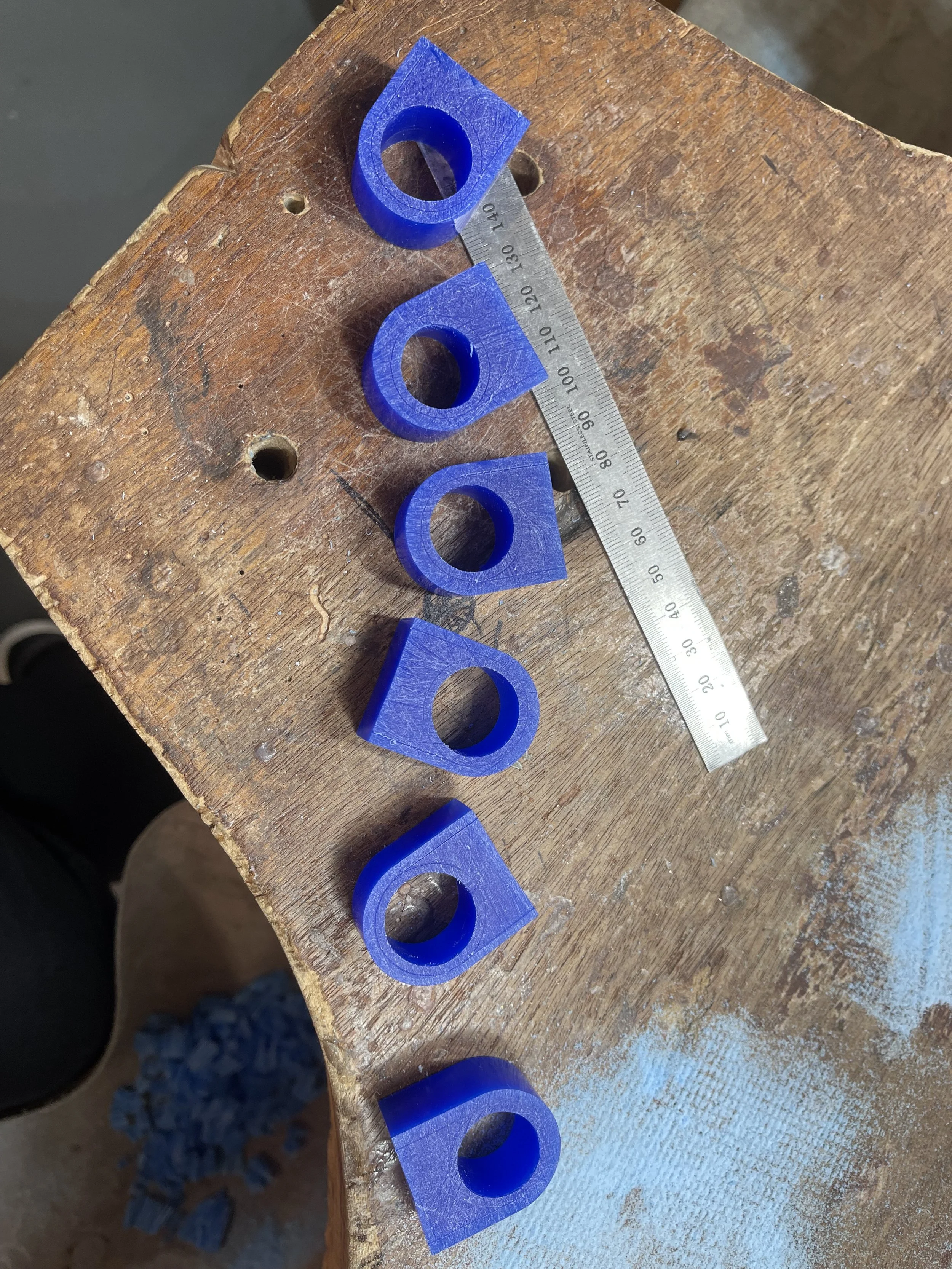
Wax Carving Foundations
-
40 hours dedicated to building confidence working with wax while developing control, proportion, symmetry and accuracy through practical exercises.
-
Exploring different types of jewellery wax and how their properties affect the way they are worked
Selecting the appropriate wax according to the technique, design and intended outcome
Using wax carving tools including files, burs, saws, scrapers, knives and abrasives
Measuring and transferring dimensions accurately
Ring sizing and shrinkage allowances
Establishing centre lines, proportion and symmetry
Controlled and efficient material removal
Piercing and creating negative space
Developing concave and convex forms
Creating flat planes, clean edges and geometric forms
Additive wax construction, joining and blending
Considering thicknesses, weight, durability and wearability
Preparing wax models for casting
Post-casting refinement and finishing, where appropriate
Module 2
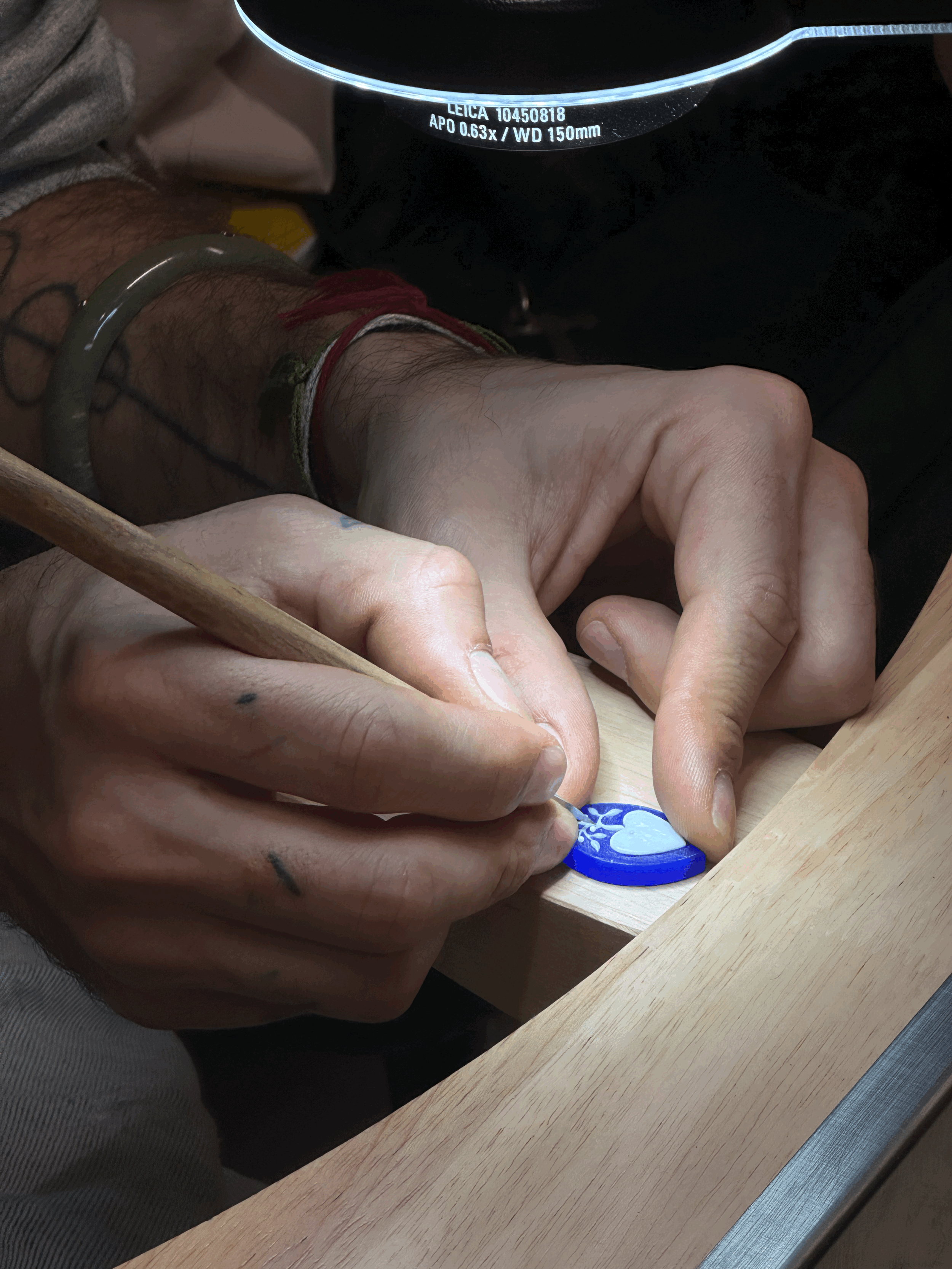
Sculptural Wax Carving, Forming & Tool Making
-
40 hours exploring a sculptural and forming approach to wax through practical exercises, working with three-dimensional form, volume, movement and surface while developing greater control over how wax can be carved, shaped and manipulated.
-
Building, shaping and removing volume
Working from photographs and physical references
Developing proportion and three-dimensional form
Carving sculptural, figurative and natural forms
Creating depth, relief and undercuts
Developing organic textures and surface detail
Exploring flowing forms, movement and volume
Working with natural asymmetry and complex multi-plane forms
Hollowing larger forms and controlling wall thickness
Understanding how sculptural decisions affect weight, wearability and function
Considering casting and production requirements throughout the making process
Making and modifying specialised wax carving tools
Exploring forming and flowing forms through Mitsuro Hikime
Post-casting refinement and finishing, where appropriate
-
Module 1 is strongly recommended but not obligatory. Module 2 builds on fundamental wax-carving skills, and the foundations covered in Module 1 are not repeated. Students joining Module 2 directly should therefore have previous knowledge and experience in basic wax-carving techniques.
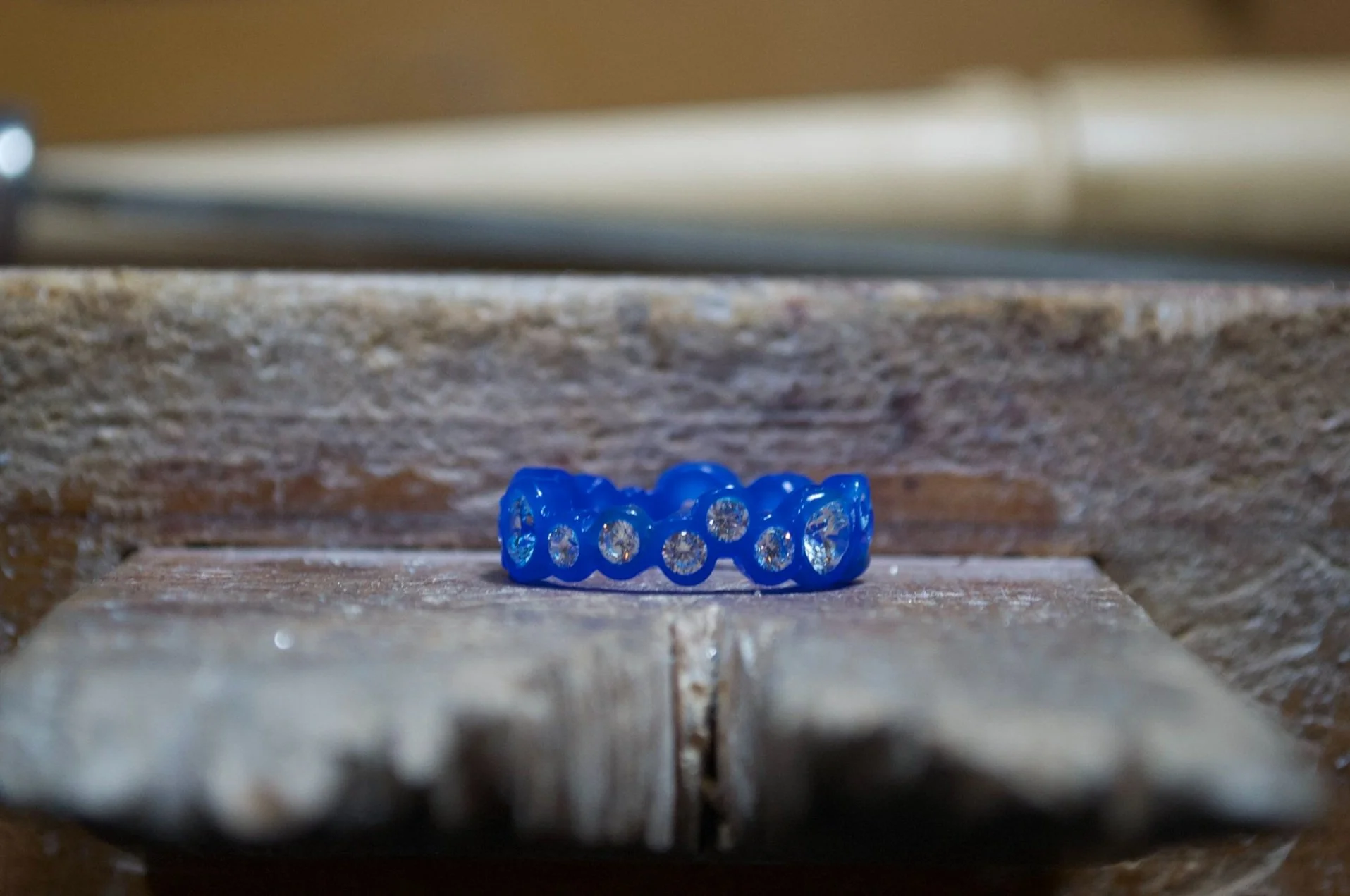
Module 3
Stone Setting in Wax: Brilliant & Oval Cuts
-
40 hours of developing the fundamentals of designing and creating stone settings in wax for brilliant-cut and oval-cut gemstones, alongside round and oval cabochon gemstones. Through practice, students explore different combinations of gemstones, settings and jewellery designs, learning how the accommodation and setting need to respond to the intended final piece while developing the skills to identify and troubleshoot problems along the way.
-
Measuring brilliant-cut and oval-cut gemstones, alongside round and oval cabochon gemstones
Understanding the different requirements of faceted and cabochon gemstones
Planning the gemstone and its accommodation in relation to the jewellery design
Carving accurate stone seats and controlling depth
Controlling wall thickness and the material surrounding the gemstone
Understanding allowances for casting and final stone setting
Exploring cast-in-place principles and suitable applications
Creating bezel and claw/prong settings in wax
Developing open-back setting construction
Controlling gemstone position, spacing, alignment and proportion
Applying different gemstone accommodations across different jewellery designs
Considering structural integrity, wearability and production when developing a setting
Refining gemstone accommodations directly in metal
Setting and securing gemstones in prepared silver rings and pendants
Troubleshooting different combinations of gemstones, settings and jewellery designs
Developing control, accuracy and technical judgement through practice and repetition
-
Previous knowledge and experience in the relevant skills covered within Module 1 and/or Module 2 is required.

Module 4
Stone Setting in Wax: Multiple Gemstone Shapes
-
40 hours building on the skills established in Module 3 by working with a wider range of faceted and cabochon gemstone shapes across different jewellery designs. Through continued practice, students explore how different gemstone shapes, proportions, settings and designs work together, encountering and troubleshooting a wider range of technical challenges while developing greater control, accuracy and judgement.
-
Working with a wider range of faceted and cabochon gemstones, including pear, heart, marquise and rectangular cuts
Understanding the different technical requirements presented by different gemstone shapes and proportions
Developing the gemstone accommodation and setting in relation to the jewellery design and intended final outcome
Carving accurate seats for curved, pointed, geometric and irregular gemstone shapes
Controlling depth, wall thickness and material allowances
Managing points, curves, straight walls, corners, orientation and alignment
Adapting accommodations and setting construction to different jewellery designs
Understanding how different combinations of gemstone, setting and design require different technical approaches
Refining stone seats, walls and setting components in preparation for casting
Considering casting and final-setting requirements while developing the wax
Evaluating structural integrity, wearability and production requirements
Refining gemstone accommodations directly in metal
Setting and securing different gemstone shapes in prepared silver rings and pendants
Troubleshooting different gemstone, setting and design combinations
Developing greater control, accuracy and technical judgement through practice, repetition and different applications
-
Previous knowledge and experience in the relevant skills covered within Module 3, together with Module 1 and/or Module 2, is required.
Practice and Progression
Practice is at the centre of the programme. Students work from a series of physical samples and progressively challenging exercises available in the studio. Each has been developed to introduce, practise or strengthen particular skills.
The exercises form part of each module's curriculum, while the number completed will depend on each student's bench progress. Students who progress confidently and accurately may work through the full range, while others may concentrate on a selection, allowing the time needed to practise, repeat, correct and refine their work before moving forward.
Alongside technical development, students learn to consider how their design and construction decisions affect wearability, functionality, production and professional jewellery-making standards. The aim is not to restrict creative decisions, but to develop the judgement needed to understand how a piece will function as jewellery and how it can be successfully produced and finished.
Invest in Your Skills
Choose your training by the number of hours, with the flexibility to study one module or combine modules into a longer programme.

PROGRAMME FEES
Each module is 40 hours and can be extended with a further week of practice and development.
The additional 40-hour rate applies only after completing 160 hours of training.
WHAT'S INCLUDED
Waxes, cubic zirconia gemstones and the tools required during training are included in the programme fee.
Castings and gemstones other than cubic zirconia are not included.
For Module 2 — Tool Making, students bring their own tools to modify and adapt during training.
Plan Your Training
Tell us what you’re interested in and when you would like to start. After receiving your enquiry, we’ll arrange a call to discuss your previous experience, training goals and preferred schedule, and help determine the most appropriate starting point for your training.
Have a question about the programme?
After receiving your enquiry, we’ll arrange a call to discuss your previous experience, training goals and preferred schedule, and help determine the most appropriate starting point for your training.